
How to Choose the Right Cable Gland for a Waterproof Junction Box
How to Choose the Right Cable Gland for a Waterproof Ju
Article overview
What Is a Cable Gland?
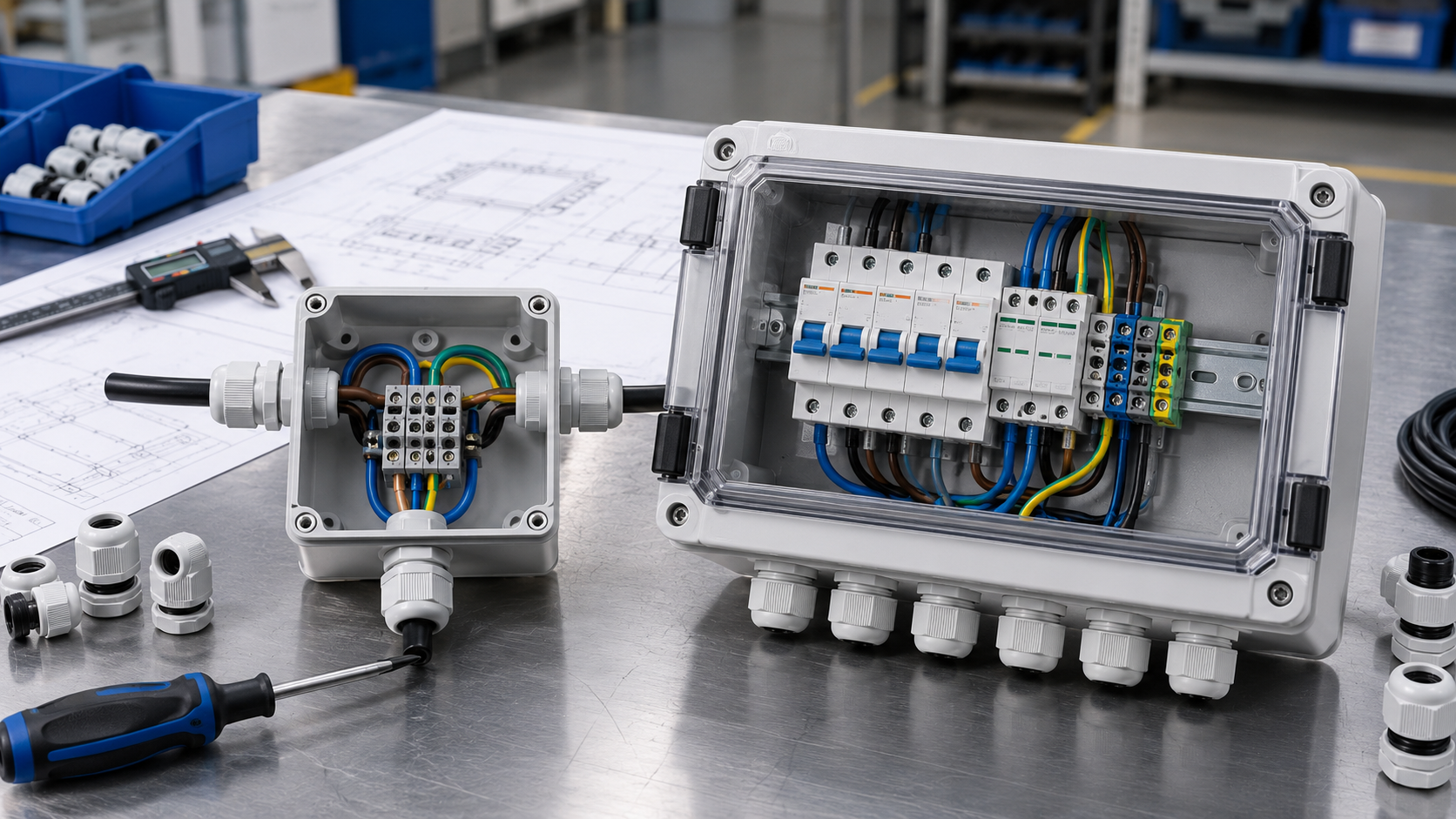
A cable gland may be a small component, but it plays an important role in the protection and reliability of a waterproof junction box. When electrical cables enter an enclosure, the cable entry becomes one of the most important points to consider for maintaining protection against water, dust, cable movement, and environmental exposure.
Choosing the right cable gland requires more than matching the thread size. The cable diameter, gland sealing range, enclosure material, mounting thickness, IP protection requirement, installation environment, and cable arrangement should all be considered before ordering.
This guide explains how to select a suitable cable gland for a waterproof junction box and what information OEM manufacturers, electrical contractors, distributors, and purchasing teams should confirm with their enclosure supplier.
A cable gland is a mechanical cable-entry component used where a cable passes through an electrical enclosure. It helps secure the cable and seal the opening around the cable.
Depending on the design, a cable gland can provide several functions:
- Secure the cable at the enclosure entry point
- Reduce movement and pulling force on internal connections
- Seal the gap between the cable and enclosure opening
- Help protect against dust and water ingress
- Provide strain relief for electrical cables
For outdoor and industrial applications, the cable gland should be considered as part of the overall enclosure sealing system rather than as an independent accessory.
Section 02
Why Cable Glands Matter for Waterproof Junction Boxes
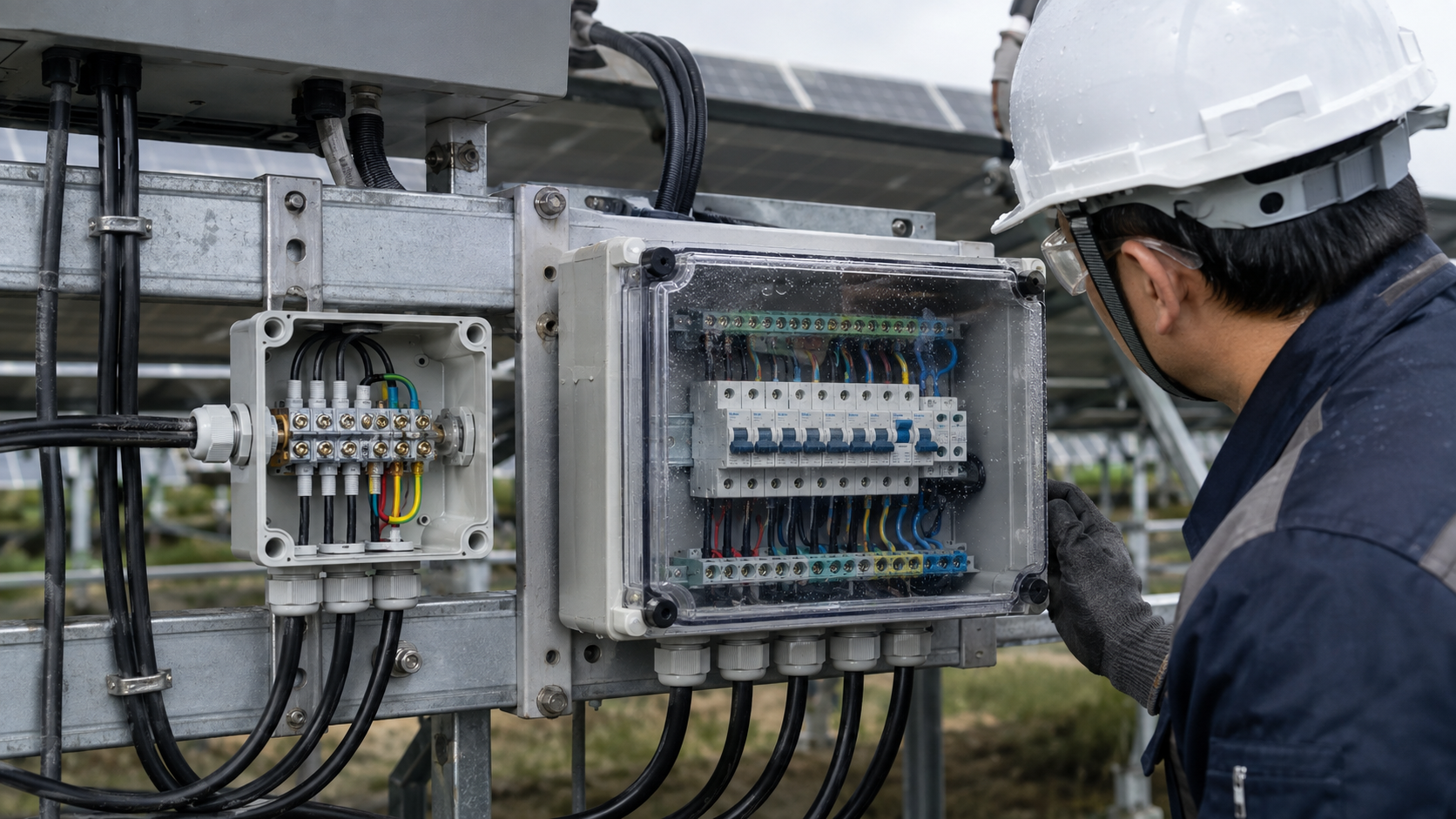
A waterproof junction box can have a suitable IP rating, but the final installation also depends on how cables enter the enclosure.
If the cable entry is not properly sealed, water or dust may enter through the opening even when the enclosure body itself is designed for outdoor protection.
This is why cable entry design should be evaluated together with:
- Enclosure IP rating
- Gasket design
- Cable diameter
- Cable gland sealing range
- Thread specification
- Installation orientation
- Unused cable openings
For applications requiring a higher level of environmental protection, the enclosure, cable gland, cable, and installation method should be treated as one complete system.
Section 03
1. Measure the Cable Diameter First
The most important specification when selecting a cable gland is the outside diameter of the cable.
A cable gland normally has a defined cable sealing range. For example, one gland may be designed for a smaller cable diameter while another is designed for a larger cable.
Before ordering, measure the actual outside diameter of the cable that will pass through the enclosure.
Do not select a cable gland only according to the cable conductor size. A cable marked as a particular cross-sectional area can have different overall diameters depending on its construction, insulation, shielding, and manufacturer.
For an OEM project, it is better to provide the actual cable specification or outside diameter to the enclosure manufacturer.
Section 04
2. Check the Cable Gland Sealing Range
After measuring the cable, compare its diameter with the sealing range of the cable gland.
The cable should fit securely within the gland's specified range. If the cable is too small, the sealing structure may not compress correctly. If the cable is too large, the gland may not be able to close properly around the cable.
For example, if a cable has an outside diameter of approximately 8 mm, the selected gland should have a compatible sealing range that includes the actual cable diameter.
For projects with several cable specifications, different gland sizes may be required even when all cables enter the same junction box.
Section 05
3. Confirm the Thread Size
The cable gland must also match the threaded opening in the waterproof junction box.
Common thread standards may include metric and other regional thread systems. The exact thread specification should be confirmed before production.
When requesting a customized junction box, provide the manufacturer with:
- Required cable gland thread
- Thread diameter
- Thread standard
- Number of cable entries
- Required cable diameter
- Entry position
Thread compatibility is particularly important for OEM enclosures because changing the cable entry specification after tooling or production has started may require additional machining or design changes.
Section 06
4. Consider the Required IP Rating
The cable gland should be selected according to the environmental protection requirements of the complete enclosure assembly.
For example, outdoor electrical equipment may require protection against rain, dust, water spray, or temporary water exposure. In these applications, the cable gland needs to provide appropriate sealing around the cable and enclosure opening.
However, the IP rating of a cable gland should not be considered in isolation.
The final protection of the assembled junction box can also depend on:
- Enclosure construction
- Gasket performance
- Cable diameter
- Gland installation
- Unused openings
- Cover fastening
- Mounting orientation
If you are selecting an enclosure for outdoor use, first determine the environmental requirements and then select the appropriate enclosure and cable-entry solution together.
For more information about enclosure protection levels, see our guide on choosing an IP-rated waterproof junction box.
Section 07
5. Choose the Right Cable Gland Material
Cable glands are available in different materials, and material selection should match the environment where the enclosure will be installed.
Plastic Cable Glands
Plastic cable glands are commonly used with plastic electrical enclosures and junction boxes. They can provide a lightweight and economical cable-entry solution for many general electrical applications.
They may be suitable for applications where weight, corrosion resistance, and cost are important considerations.
Metal Cable Glands
Metal cable glands can be considered for applications requiring additional mechanical strength or specific grounding and shielding requirements.
The choice between plastic and metal should depend on the cable type, enclosure material, electrical design, mechanical requirements, environmental conditions, and applicable standards.
Section 08
6. Consider the Enclosure Wall Thickness
The thickness of the junction box wall can affect cable gland installation.
When designing or modifying an enclosure, the manufacturer should consider the relationship between:
- Gland thread length
- Enclosure wall thickness
- Locknut dimensions
- Internal component clearance
- External installation space
This becomes particularly important when multiple cable glands are installed close together or when the internal space is limited.
For customized waterproof junction boxes, the cable entry position should be checked against the internal components before the final design is approved.
Section 09
7. Plan the Cable Entry Position Carefully
Cable entry location can affect both installation and long-term maintenance.
Common considerations include:
- Bottom entry
- Side entry
- Top entry
- Entry spacing
- Cable bending radius
- Internal terminal arrangement
- Drainage and water exposure
For outdoor applications, cable entries are often positioned to reduce direct exposure to rain and standing water. The exact arrangement should depend on the installation environment and the equipment layout.
For OEM projects, providing a drawing showing the desired cable entry positions can help the enclosure manufacturer evaluate whether the requested configuration is practical.
Section 10
8. Leave Enough Space Between Cable Entries
When several cables enter the same junction box, the distance between cable glands should be carefully considered.
Installing glands too close together can create several problems:
- Insufficient installation space
- Difficulty tightening the glands
- Cable interference
- Reduced maintenance accessibility
- Limited internal wiring space
The required spacing depends on gland dimensions, cable diameter, enclosure size, and installation method.
This is one reason why enclosure design should consider the cable arrangement before production rather than adding holes after the enclosure has already been manufactured.
Section 11
9. Consider Strain Relief
Outdoor and industrial cables may experience vibration, movement, pulling forces, or repeated maintenance.
A suitable cable gland can help secure the cable and reduce mechanical stress on the electrical connections inside the junction box.
For equipment exposed to vibration or cable movement, the cable-entry system should be evaluated together with the mounting structure and internal wiring arrangement.
If the cable is likely to experience significant mechanical movement, additional strain-relief measures may also be required depending on the application.
Section 12
10. Think About Long-Term Outdoor Conditions
Outdoor electrical enclosures can be exposed to more than rain.
Depending on the installation location, the enclosure and cable-entry system may experience:
- UV exposure
- Temperature changes
- Condensation
- Snow
- Dust
- Humidity
- Water spray
- Vibration
- Mechanical impact
The cable gland material and sealing design should therefore be compatible with the expected environment.
For example, an enclosure installed in direct sunlight may require different material considerations from an enclosure installed inside a protected electrical cabinet.
Section 13
Waterproof Junction Box and Cable Gland Should Be Designed Together
For standard installations, it may be possible to select a suitable cable gland separately from the enclosure.
For OEM equipment, however, it is often better to consider the enclosure and cable-entry system together.
A complete design review should consider:
- Enclosure dimensions
- Internal component layout
- Cable quantity
- Cable diameter
- Gland size
- Entry location
- IP protection requirements
- Mounting method
- Maintenance access
This approach can reduce design changes during production and make the final installation easier.
Section 14
When Should You Use a Customized Waterproof Junction Box?
A standard junction box may be sufficient when the cable quantity, cable diameter, mounting method, and internal components match an existing product.
Customization may be more appropriate when you need:
- Multiple cable entry holes
- Specific cable gland sizes
- Custom hole positions
- Internal mounting structures
- Custom dimensions
- Special cable routing
- Custom colors
- Logo printing
- Laser marking
For equipment manufacturers, a customized enclosure can integrate the cable-entry system directly into the equipment design.
BOWO Electric provides customization options for waterproof electrical enclosures, including CNC hole opening, color customization, UV printing, laser marking, and other OEM requirements.
Section 15
What Information Should You Provide When Ordering?
If you are requesting a quotation for a waterproof junction box with cable glands, providing the following information can help the manufacturer evaluate your requirements more accurately:
- Enclosure length, width, and height
- Required IP rating
- Number of cable entries
- Outside diameter of each cable
- Cable gland thread requirement
- Required gland material
- Cable entry positions
- Internal component dimensions
- Mounting requirements
- Operating environment
- Estimated quantity
- Technical drawing or 3D file, if available
For a customized project, even a simple dimension drawing showing cable entry positions can help the manufacturer understand the requirement.
Section 16
Common Cable Gland Selection Mistakes
Choosing Only by Thread Size
A matching thread does not automatically mean that the gland is suitable for the cable. The cable diameter and gland sealing range must also be compatible.
Ignoring the Cable Diameter
The actual outside diameter of the cable should be confirmed rather than estimated from the conductor size.
Installing Too Many Glands in a Small Area
Insufficient spacing can make installation difficult and reduce available internal space for wiring.
Ignoring the Installation Environment
A gland used indoors may not be appropriate for direct outdoor exposure, high humidity, UV exposure, or other demanding conditions.
Adding Cable Entries Without Considering Internal Components
A cable hole may appear suitable from the outside but interfere with terminals, circuit boards, mounting screws, or other components inside the enclosure.
Section 17
How BOWO Can Help With Waterproof Junction Box Customization
For standard applications, selecting an existing waterproof junction box can be the most efficient solution.
For OEM equipment, however, the enclosure often needs to match the customer's cable arrangement, internal components, mounting structure, and installation environment.
BOWO Electric provides waterproof electrical enclosure solutions that can be adapted for different applications and OEM requirements.
Customization may include cable entry holes, CNC machining, mounting modifications, internal structures, color customization, UV printing, and laser marking.
When discussing a customized enclosure, providing your cable specifications and enclosure drawing allows the engineering team to evaluate the cable-entry arrangement together with the enclosure structure.
Section 18
Final Checklist: Choosing a Cable Gland for a Waterproof Junction Box
- Measure the actual cable outside diameter.
- Confirm the gland's sealing range.
- Check the required thread size and standard.
- Confirm the required IP protection level.
- Select a suitable gland material.
- Check enclosure wall thickness.
- Plan cable entry positions.
- Allow enough spacing between cable glands.
- Consider cable bending and strain relief.
- Evaluate UV, temperature, moisture, and other environmental conditions.
- Check the relationship between cable entries and internal components.
Section 19
Need a Waterproof Junction Box With Custom Cable Entries?
If you are sourcing waterproof junction boxes for outdoor electrical equipment, industrial systems, CCTV, control equipment, or OEM projects, BOWO Electric can help evaluate the enclosure and cable-entry requirements together.
To request a quotation, send your enclosure dimensions, cable diameter, number of cable entries, required IP rating, cable entry positions, quantity, and application environment. If available, you can also provide a technical drawing or 3D file.
This information allows the enclosure configuration and customization requirements to be evaluated before production.
Planning a project?
Share the application, installation environment and enclosure requirements with our engineering team.