
How to Choose the Right IP Rated Waterproof Junction Box for Outdoor Electrical Projects
Outdoor electrical systems are regularly exposed to rai
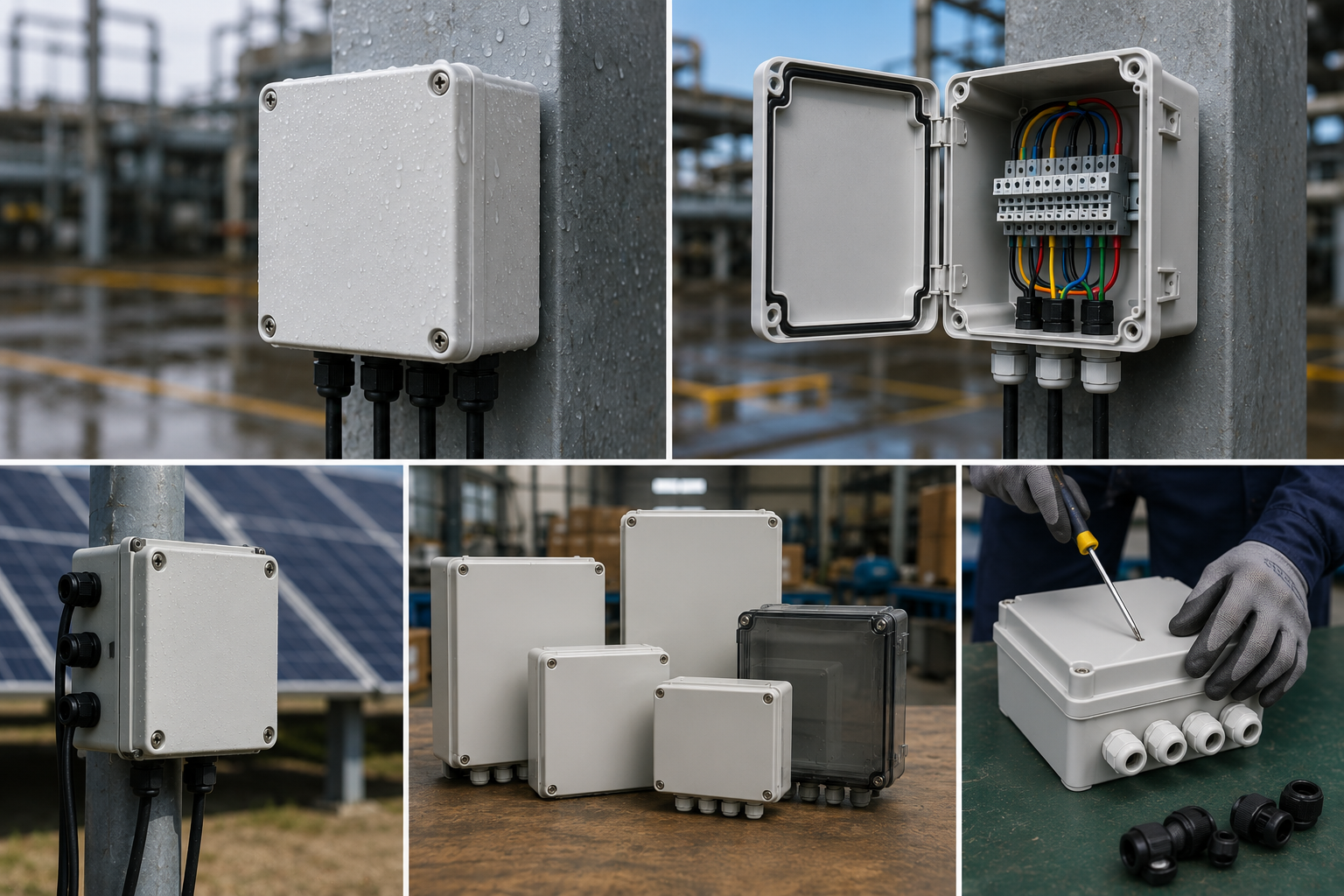
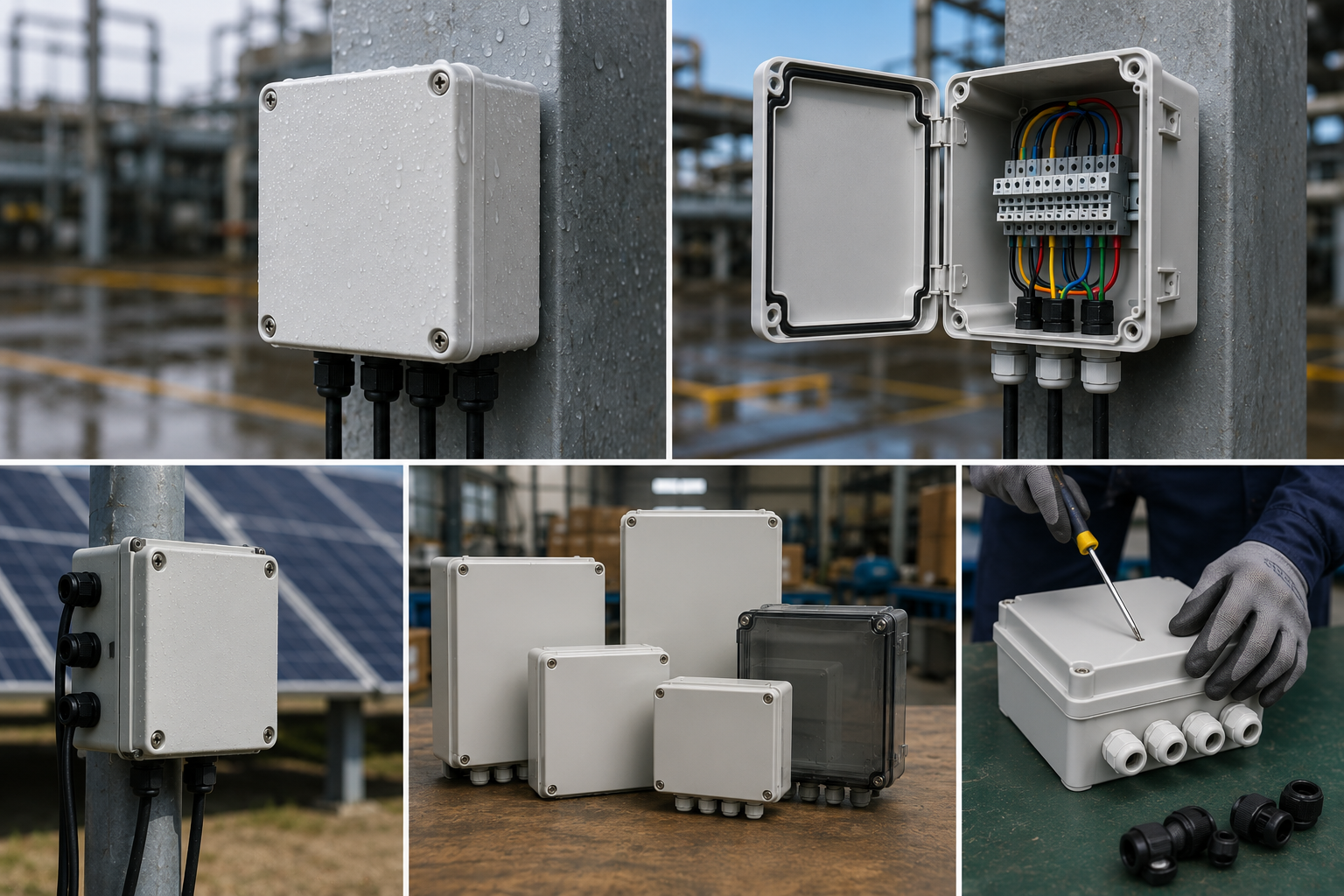
Article overview
What Does an IP Rating Mean for an Electrical Enclosure?
Outdoor electrical systems are regularly exposed to rain, dust, humidity, ultraviolet radiation, temperature changes and accidental impact. Without a correctly selected enclosure, moisture and contamination may enter the box and damage terminals, circuit breakers, cables and other electrical components.
Choosing the right waterproof junction box therefore involves more than comparing dimensions and prices. Engineers, electrical contractors, equipment manufacturers and distributors should evaluate the installation environment, IP protection level, enclosure material, internal layout, cable entry design and supplier capabilities before placing an order.
This guide explains the main technical and purchasing factors that should be considered when selecting an IP-rated waterproof electrical enclosure for outdoor and industrial projects.
An Ingress Protection rating indicates how effectively an enclosure protects its internal components against solid objects and water. The rating normally contains two digits.
- The first digit describes protection against solid particles such as dust.
- The second digit describes protection against water entering the enclosure.
For outdoor electrical projects, the most frequently specified protection levels are IP65, IP66 and IP67. However, a higher number is not automatically the best option for every application. The correct choice depends on the actual exposure conditions, installation method and maintenance requirements.
IP65 Electrical Enclosures
An IP65 enclosure is designed to prevent dust from entering and to protect internal components against water jets. It is commonly used for wall-mounted power distribution, residential electrical systems, commercial buildings, solar installations and sheltered outdoor equipment.
For installations that require circuit breakers or DIN rail modules, an IP65 waterproof electrical distribution box with a transparent cover can make routine inspection easier because technicians can view the internal components without opening the enclosure.
IP66 Electrical Enclosures
IP66 enclosures provide protection against dust and powerful water jets. They are often selected for exposed industrial locations, outdoor machinery, communication equipment, renewable energy systems and areas subject to heavy rain or frequent washdown.
Where technicians need regular access to the enclosure, an IP66 hinged waterproof junction box can offer a practical balance between sealing performance and convenient maintenance. Hinged covers and secure latches allow the box to be opened without repeatedly removing separate cover screws.
IP67 Electrical Enclosures
IP67 enclosures are designed to provide dust protection and resistance to temporary water immersion under specified test conditions. They are commonly considered for roadside equipment, outdoor cable connections, low-lying installations and projects where temporary flooding or accumulated water may occur.
For cable connections and electrical terminals exposed to demanding outdoor conditions, an IP67 outdoor waterproof junction box can provide a sealed enclosure for protecting wiring from rain, moisture, dust and environmental contamination.
Section 02
Start with the Actual Installation Environment
One of the most common purchasing mistakes is selecting an enclosure based only on the IP rating shown in a catalogue. Before choosing a product, the complete installation environment should be evaluated.
Important questions include:
- Will the enclosure be installed indoors, outdoors or under a shelter?
- Will it be exposed to direct sunlight for long periods?
- Is the area subject to heavy rain, water jets or temporary flooding?
- Are dust, sand, oil, chemicals or salt present?
- Will the enclosure be installed near vibrating machinery?
- How often will technicians need to open the box?
- What is the expected operating temperature?
Different environments create different risks. A protected indoor control panel may only need basic dust and splash resistance, while roadside monitoring equipment may require stronger sealing, UV resistance and impact protection.
Buyers can review BOWO Electric’s electrical enclosure application solutions to compare how waterproof boxes are used across different outdoor, industrial and electrical installation environments.
Section 03
Choose the Appropriate Enclosure Material
The enclosure material affects impact resistance, temperature performance, outdoor durability, weight, appearance and production cost. ABS and polycarbonate are two common materials used for plastic electrical enclosures.
ABS Waterproof Junction Boxes
ABS is widely used for electrical junction boxes because it offers good dimensional stability, impact resistance and manufacturing efficiency. It is suitable for many indoor and general outdoor installations when the material formulation and enclosure design match the application requirements.
ABS enclosures are commonly used for:
- Electrical cable connections
- Industrial control systems
- Communication equipment
- Wall-mounted terminal installations
- General machinery and automation equipment
BOWO Electric’s AG plastic waterproof box series includes enclosure solutions designed for cable protection, electrical connections and outdoor or industrial installations.
Polycarbonate Covers and Enclosures
Polycarbonate is often selected when higher impact strength, improved visibility or stronger outdoor performance is required. Transparent polycarbonate covers are especially useful when operators need to inspect circuit breakers, indicator lights or electrical modules without opening the enclosure.
For some projects, an ABS base combined with a transparent PC cover provides a practical solution. The ABS body supports the electrical components, while the transparent cover improves inspection and maintenance efficiency.
Section 04
Check the Internal Usable Space, Not Only External Dimensions
External length, width and height do not always represent the actual usable space inside the enclosure. Internal ribs, screw columns, hinges, mounting plates and gasket structures can reduce the available installation area.
Before approving a waterproof box, the buyer should confirm sufficient space for:
- Terminal blocks
- DIN rails
- Miniature circuit breakers
- Power supplies
- Relays and contactors
- PCB assemblies
- Cable bending radius
- Heat dissipation clearance
- Future component expansion
A box that is too small may force cables into tight bends, make installation difficult and increase maintenance time. Buyers should provide internal component dimensions, mounting positions and cable routing requirements to the enclosure supplier whenever possible.
Section 05
Evaluate Cable Entry and Cable Gland Requirements
A waterproof enclosure can lose its protective performance when cable entries are incorrectly positioned or sealed. The cable entry design should therefore be considered during product selection, not after the enclosure has been delivered.
Confirm the following details before production:
- The number of cable entries
- The cable diameter range
- The required cable gland thread
- The position of each entry hole
- The distance between adjacent cable glands
- The required sealing washers or plugs
- Whether unused holes must be sealed
Pre-machined openings can reduce installation time, but the hole dimensions and positions must match the selected glands and cables. For OEM projects, CNC machining or customized molds may be considered when standard enclosure structures do not meet the required layout.
Section 06
Inspect the Gasket and Cover Compression Design
The gasket is one of the most important components in a waterproof junction box. Even a durable enclosure body may fail to prevent water ingress when the gasket is uneven, damaged, incorrectly positioned or insufficiently compressed.
A reliable sealing structure should provide:
- Continuous gasket contact around the cover
- Even compression after the screws or latches are tightened
- Stable gasket positioning during assembly
- Resistance to deformation during normal use
- A cover structure that minimizes uneven pressure
For boxes that must be opened regularly, the durability of the gasket and locking mechanism becomes especially important. Hinged products with metal or plastic latches may improve maintenance efficiency, but the latch positions must still provide consistent gasket compression.
Section 07
Consider Impact Protection and Mechanical Strength
Water protection alone does not guarantee that an enclosure is suitable for an industrial environment. Outdoor equipment may also be exposed to tools, falling objects, vibration, transportation impact and accidental contact.
When mechanical risk is present, buyers should evaluate:
- Housing wall thickness
- Material impact resistance
- Cover fastening structure
- Hinge and latch durability
- Mounting point strength
- IK impact rating, when applicable
The enclosure should remain securely mounted and sealed after normal installation loads and expected environmental impact.
Section 08
Do Not Ignore UV Exposure and Temperature Changes
Outdoor electrical enclosures may remain in direct sunlight for years. UV exposure can gradually affect the appearance and mechanical properties of unsuitable plastic materials. Repeated heating and cooling may also cause expansion, contraction and stress around covers, screws and cable entries.
For long-term outdoor applications, buyers should discuss the following with the manufacturer:
- Expected outdoor service conditions
- UV-resistant material requirements
- Minimum and maximum operating temperatures
- Gasket performance across the temperature range
- Color stability requirements
- Whether a sunshade or additional cover is recommended
Providing accurate application details allows the supplier to recommend a more appropriate material and enclosure structure.
Section 09
Choose the Correct Cover and Opening Method
Waterproof boxes are available with screw-fixed covers, hinged covers, plastic latches and metal latches. Each design has different advantages.
Screw-Fixed Covers
Screw-fixed covers provide a simple and secure structure. They are suitable for cable connections and installations that do not require frequent access. The screws should be tightened evenly to maintain consistent pressure on the gasket.
Hinged Covers
Hinged covers are more convenient for control panels and equipment that require regular inspection. Because the cover remains attached to the enclosure, maintenance personnel do not need to hold or store a separate lid.
Plastic and Metal Latches
Latch-type closures allow faster access than multiple cover screws. Metal latches may be preferred for demanding industrial applications, while plastic latches can provide a lightweight and corrosion-resistant option for suitable environments.
The final choice should reflect how often the enclosure will be opened, the operating environment and the required sealing consistency.
Section 10
Verify Product Testing and Documentation
Procurement teams should not rely only on a product title that contains an IP rating. They should request relevant specifications, testing information and certification documents that apply to the selected model.
Depending on the target market and application, buyers may need to review:
- IP protection test information
- IK impact performance
- CE documentation
- RoHS compliance
- Material specifications
- Temperature range
- Product drawings and dimensions
- Installation instructions
Available company and product credentials can be reviewed on BOWO Electric’s qualification and certification page. Buyers should still confirm which documents apply to the exact model being purchased, especially for regulated or project-specific applications.
Section 11
Assess the Manufacturer’s Customization Capability
Standard electrical enclosures are suitable for many projects, but equipment manufacturers often require additional customization. These requirements may include special holes, branded surfaces, custom colors or internal mounting structures.
Common customization options include:
- CNC hole machining
- Customized cable entry positions
- Laser marking
- UV color printing
- Custom enclosure colors
- Internal dividers
- Mounting plates and DIN rails
- Custom packaging
- New mold development
Before requesting a quotation, buyers should prepare drawings, component layouts, target quantities, material requirements and the intended operating environment. Clear project information helps the manufacturer evaluate feasibility, tooling costs and production lead time.
Section 12
Review the Supplier’s Quality Control Process
The long-term performance of a waterproof junction box depends on manufacturing consistency. Two products with similar dimensions and materials may perform differently because of variations in molding, gasket installation, cover flatness and assembly quality.
A structured production and inspection process may include:
- Incoming raw material inspection
- Injection molding process control
- Dimensional inspection
- Surface and appearance inspection
- Gasket and accessory verification
- Cover assembly inspection
- Waterproof performance verification
- Packaging and quantity inspection
For OEM and wholesale orders, buyers should also confirm how the supplier manages batch consistency, defect handling, production records and pre-shipment inspection.
Section 13
Common Mistakes When Purchasing Waterproof Junction Boxes
Choosing Only by Price
A lower unit price may not represent a lower total cost. Poor sealing, brittle materials or inconsistent dimensions can lead to installation delays, product returns and equipment failures.
Selecting the Highest IP Rating Without Evaluating the Application
A higher IP rating may be unnecessary for a sheltered installation. At the same time, a basic enclosure may be insufficient for exposed roadside or industrial equipment. The protection level should match the real environment.
Ignoring Internal Component Layout
Selecting a box before confirming the internal components can result in insufficient clearance, poor cable routing or difficult maintenance.
Drilling Entry Holes Without Considering Sealing
Incorrectly sized or positioned cable holes can compromise waterproof performance. Cable glands, seals and unused openings must be considered as part of the complete enclosure system.
Assuming Every Certificate Applies to Every Product
Manufacturers may offer several product series with different ratings and certifications. Buyers should verify the documentation for the exact model and material configuration being ordered.
Section 14
Practical Selection Guide by Application
| Application | Main Risks | Typical Selection Considerations |
|---|---|---|
| Indoor industrial control | Dust, accidental contact and vibration | Dust protection, impact strength, convenient maintenance and sufficient internal space |
| Outdoor cable connection | Rain, moisture, dust and temperature changes | IP66 or IP67 protection, suitable cable glands, stable gasket and UV-resistant material |
| Solar power system | Sunlight, heat, rain and long-term outdoor exposure | UV resistance, temperature performance, secure mounting and appropriate IP protection |
| DIN rail power distribution | Dust, water and maintenance access | Transparent cover, DIN rail compatibility, cable space and IP65 or higher protection as required |
| Roadside monitoring equipment | Heavy rain, dust, temporary water exposure and impact | IP67 protection where appropriate, impact resistance, secure mounting and sealed cable entries |
| Industrial automation equipment | Dust, oil, vibration and frequent servicing | Durable housing, hinged access, reliable latches and application-specific sealing |
Section 15
Questions to Ask Before Requesting a Quotation
Providing complete project information helps the manufacturer recommend the correct enclosure and prepare a more accurate quotation. Buyers should be ready to provide:
- Required enclosure dimensions
- Internal component drawings
- Required IP and IK ratings
- Installation environment
- Operating temperature range
- Material and color requirements
- Cable entry sizes and positions
- Required accessories
- Customization requirements
- Estimated order quantity
- Target market and certification requirements
- Expected delivery schedule
For customized waterproof junction boxes, distribution boxes or electrical enclosure projects, buyers can contact BOWO Electric with drawings and application details for product selection and manufacturing evaluation.
Section 16
Frequently Asked Questions
Is IP67 always better than IP65?
Not necessarily. IP67 provides protection against temporary immersion under specified test conditions, while IP65 is designed for dust protection and water jets. The appropriate rating depends on the installation environment and project requirements.
Can an IP65 junction box be installed outdoors?
An IP65 enclosure may be suitable for many outdoor installations, but the buyer should also consider direct sunlight, temperature changes, mounting position, cable entries and long-term exposure. The complete installation must maintain the required protection level.
What is the difference between a junction box and a distribution box?
A junction box is commonly used to protect cable connections, terminals or small electrical components. A distribution box usually accommodates circuit breakers, DIN rails and power distribution modules.
Can holes be added to a waterproof electrical enclosure?
Yes. Cable holes, button openings and display cutouts can be added through CNC machining or custom molding. However, all openings must be correctly designed and sealed to maintain the required protection performance.
Should I choose a transparent or opaque cover?
A transparent cover is useful when internal circuit breakers, indicators or displays need to be checked without opening the box. An opaque cover may be preferred when visibility is unnecessary or when internal components should be concealed.
What information is needed for an OEM waterproof box project?
The manufacturer normally needs enclosure dimensions, internal component layouts, hole drawings, material requirements, colors, printing details, expected quantity, certification requirements and the intended application environment.
Section 17
Conclusion
Selecting an IP-rated waterproof junction box requires more than choosing a size and protection number. Buyers should evaluate environmental exposure, material performance, internal usable space, gasket design, cable entries, mechanical strength, maintenance frequency and supplier quality control.
A properly selected enclosure protects electrical components, simplifies installation and reduces the risk of future maintenance or equipment failure. For projects involving cable connections, outdoor control systems, solar equipment or DIN rail power distribution, working with an experienced waterproof electrical enclosure manufacturer can also provide access to engineering support, customization and stable batch production.
Section 18
Need Help Selecting a Waterproof Electrical Enclosure?
Send BOWO Electric your enclosure dimensions, internal component layout, cable entry requirements, target IP rating and estimated order quantity. Our team can help evaluate suitable standard products or customized manufacturing options for your project.
Planning a project?
Share the application, installation environment and enclosure requirements with our engineering team.