
Weather-Resistant Electrical Protection for an E-Bike Charging Area in Hangzhou, China
Between September and November 2025, BOWO Electric supp
Article overview
Project Background
Between September and November 2025, BOWO Electric supported the electrical enclosure requirements for an electric bicycle charging area upgrade at a residential community in Hangzhou, Zhejiang, China.
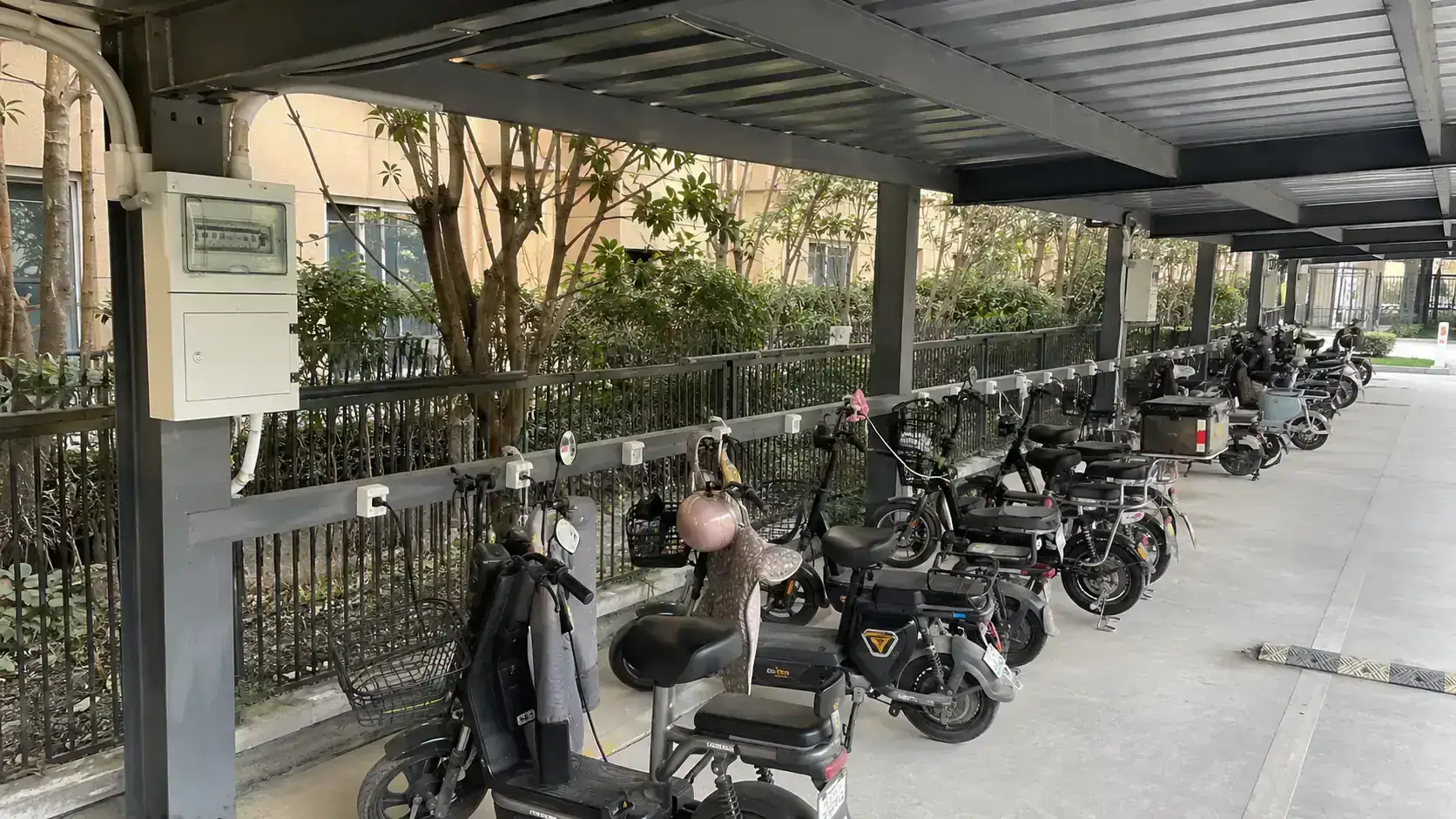
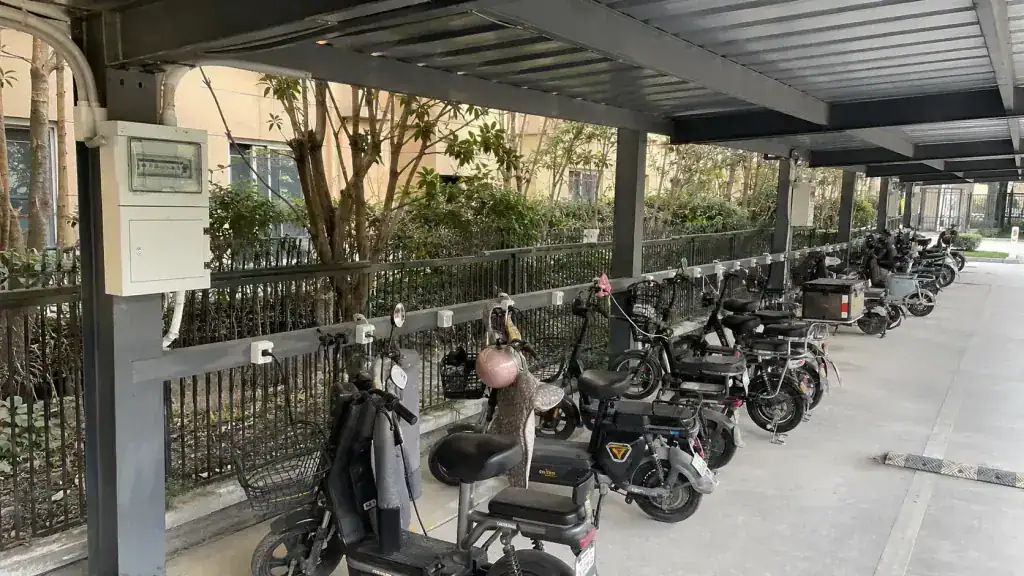
The charging area was located at ground level beneath a steel canopy near one of the community entrances. It was open along the sides for ventilation and daily access, which made it practical for residents but also exposed parts of the electrical installation to wind-driven rain, persistent humidity, dust, and moisture from routine cleaning.
The project involved electrical connection points serving multiple charging positions, local circuit protection, and cable routes distributed along the covered parking structure.
The residential community already had a designated area for electric bicycles, but the charging facility was being reorganized to provide a clearer and more maintainable electrical layout.
The site was not a fully enclosed electrical room. Residents moved bicycles in and out throughout the day, charging demand increased in the evening, and the open-sided canopy allowed outdoor conditions to affect the installation.
During dry weather, most electrical components remained protected beneath the roof. During heavy rain, however, moisture could reach the outer rows of the parking area, particularly where wind pushed rain beneath the canopy.
The contractor also had to work around steel columns, charging outlets, cable routes, parked bicycles, drainage edges, and limited wall space.
This meant the enclosure arrangement had to be planned around actual installation positions rather than treating the entire charging area as one identical environment.
Section 02
What the Contractor Found on Site
The Outer Charging Row Had Greater Rain Exposure
The first issue became clear during the site review.
Charging positions closest to the open edge of the canopy were more exposed than those farther inside. The roof provided overhead protection, but it could not prevent all wind-driven rain from reaching the perimeter.
Electrical connection points near this outer row therefore required more careful consideration of enclosure location, cover sealing, and cable entry.
Moving every connection deeper inside was not practical because the cable routes followed the charging layout and structural supports.
The team instead reviewed the exposed positions individually.
Multiple Charging Points Created Repeated Branch Connections
The charging area served a row of electric bicycles rather than one large charging device.
This created repeated electrical branch points along the installation. Some connections were relatively simple, while others brought together incoming and outgoing conductors or required more internal terminal space.
Using one compact enclosure size for every position would have made several branch points unnecessarily crowded.
The contractor therefore separated the connection points according to actual conductor quantity and wiring space.
Evening Charging Increased the Importance of Circuit Organization
The site experienced its busiest charging period after residents returned home.
That operating pattern made clear circuit organization and local protection particularly important. The electrical layout needed to remain understandable for maintenance personnel, especially when checking individual branches or isolating part of the charging area.
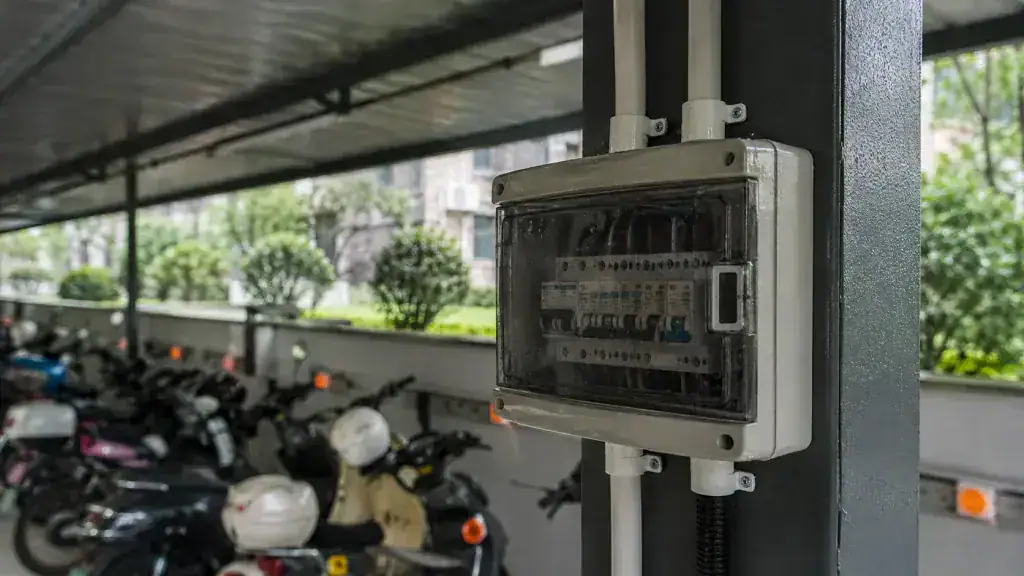
At selected positions, DIN-rail devices required a dedicated distribution enclosure rather than a standard junction box.
Cable Routes Had to Work Around Bicycles and Structural Columns
The charging area was a working community facility, not an empty technical room.
Cable routes had to avoid positions where parked bicycles, handlebars, baskets, or routine movement could interfere with the installation. Enclosures also needed to remain accessible after the charging spaces were occupied.
The contractor used the canopy structure and available mounting surfaces to keep electrical components away from the main bicycle movement zone while preserving maintenance access.
Section 03
The Contractor’s Main Requirements
Following the site review, the enclosure package was organized around several practical requirements:
- protection for branch connections in a semi-outdoor charging environment;
- different enclosure sizes for different conductor arrangements;
- secure cable entries at exposed and sheltered positions;
- local distribution protection for selected charging circuits;
- enough internal space for terminals and conductor routing;
- accessible covers for inspection and maintenance;
- mounting positions away from routine bicycle contact;
- a consistent installation method across repeated charging points.
The environmental requirement was important, but it was only one part of the selection process.
An enclosure also had to fit the wiring inside it, match the cable route, and remain serviceable after the charging area returned to normal use.
Section 04
BOWO Electric Solution
Waterproof Junction Boxes for Repeated Branch Connections
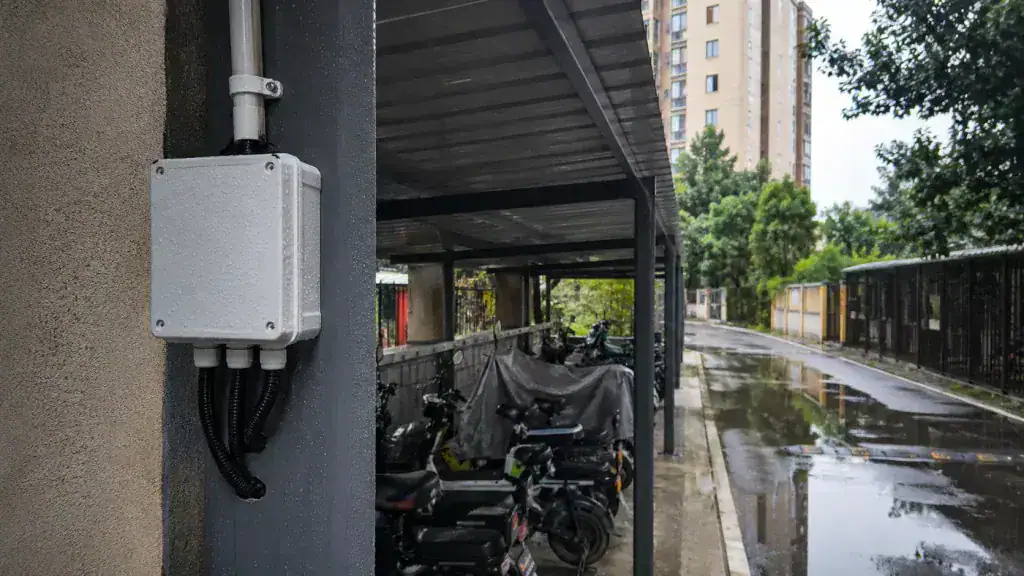
Waterproof junction-box configurations were used for selected branch connections distributed along the charging area.
The enclosure size was matched to the wiring at each position rather than standardized around the smallest available box.
For simpler branch points, a compact box provided sufficient room for conductors and terminals. Locations with additional incoming and outgoing cables required more internal space.
The selection process considered:
- conductor quantity;
- terminal arrangement;
- cable entry direction;
- available mounting surface;
- distance from the open canopy edge;
- access after bicycles were parked.
This approach reduced unnecessary crowding inside the boxes and gave installers a clearer layout for future inspection.
Additional Attention at Rain-Exposed Positions
Electrical points closer to the open side of the canopy were treated separately from connections deeper inside the covered area.
At these locations, the contractor paid closer attention to:
- enclosure closure;
- cable entry orientation;
- compatibility between cable diameter and entry components;
- mounting height;
- direct exposure to wind-driven rain.
Where practical, cable routes were arranged so that water was less likely to track directly toward an enclosure entry.
The project did not assume that a protection rating alone would correct a poor installation position. Enclosure selection and installation geometry were considered together.
Local Distribution Boxes for Circuit Protection
Selected charging circuits required local protection devices mounted on DIN rail.
These positions used a distribution-box format rather than a standard junction enclosure.
The required enclosure space was reviewed against:
- number of protective devices;
- DIN-rail arrangement;
- incoming and outgoing cable routes;
- bending space;
- access for inspection;
- available mounting width.
This created a clearer distinction between simple cable branch points and locations containing circuit-protection components.
Section 05
Three Installation Decisions That Shaped the Final Layout
1. Exposed and Sheltered Positions Were Not Treated the Same
The contractor divided the charging area into practical exposure zones.
Connections near the open canopy edge received greater attention to rain exposure and cable entry. Positions deeper beneath the roof were more sheltered but still had to account for humidity, dust, and cleaning splash.
This prevented the project from relying on one simplified assumption for the whole site.
2. Enclosure Size Followed the Wiring
Several repeated branch points looked similar from outside but contained different numbers of conductors.
The contractor checked the internal wiring requirement before finalizing box size.
This left sufficient room for terminal placement and reduced excessive conductor bending inside more crowded connections.
3. Maintenance Access Was Checked with Bicycles in Place
An enclosure that is easy to reach during installation can become difficult to service once a charging area is fully occupied.
Before finalizing mounting positions, the team considered normal bicycle parking patterns, handlebar height, baskets, structural columns, and access routes.
Boxes were kept away from obvious contact points while covers remained reachable for inspection.
Section 06
Project Result
By the completion of the upgrade in November 2025, the charging area had a more structured electrical enclosure arrangement across its repeated branch and local protection points.
The final layout distinguished between:
- sheltered internal charging positions;
- more exposed perimeter locations;
- simple branch connections;
- higher-capacity connection points;
- local DIN-rail protection positions.
This gave the contractor a consistent method for matching enclosure type, internal space, cable entry, and installation position to the actual conditions at each point.
The completed arrangement also made the electrical layout easier to follow during routine inspection. Junction points and local protection locations served different functions and were treated accordingly.
The project did not depend on one enclosure type being used everywhere. Its practical value came from applying different enclosure formats where the wiring and exposure conditions genuinely differed.
Section 07
Practical Lessons from the Hangzhou Charging Area
This project highlighted several issues that are common in semi-outdoor electric bicycle charging facilities.
A roof does not make every electrical position equally sheltered. Connections close to an open edge can experience very different conditions from those installed only a few metres farther inside.
Repeated charging points also create their own installation challenge. Similar-looking positions may require different internal wiring space depending on branch configuration.
For comparable charging-area projects, useful information to confirm before enclosure selection includes:
- whether the location is indoor, covered, or fully outdoor;
- distance from open canopy edges;
- expected rain and cleaning exposure;
- number of cables entering each enclosure;
- cable outside diameter;
- terminal quantity;
- need for DIN-rail devices;
- available mounting surface;
- normal bicycle parking position;
- future access to the enclosure cover.
Section 08
Electrical Enclosures for E-Bike Charging Facilities
BOWO Electric manufactures waterproof electrical enclosures, junction boxes, distribution boxes, and cable connection products for applications requiring protection from moisture, dust, and demanding installation conditions.
For electric bicycle charging areas, enclosure selection can be reviewed against the charging layout, branch-circuit arrangement, cable information, mounting position, and actual environmental exposure.
Send BOWO Electric your drawings, enclosure dimensions, cable-entry requirements, circuit layout, or site information to discuss a suitable configuration for your charging facility project.
Planning a project?
Share the application, installation environment and enclosure requirements with our engineering team.